Autonomous Modular Causeway Ferry System
(AM-CFS)
The Next Generation Solution for Ship-To-Shore Connections.

AM-CFS Concept of OPerations
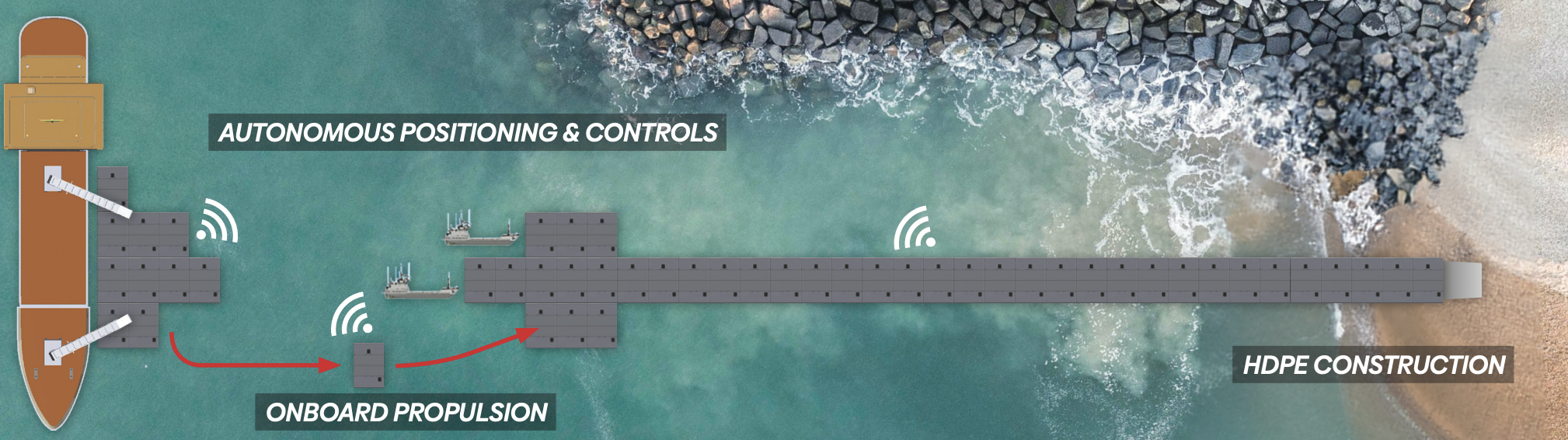
Nominal Operations
Lightly Contested
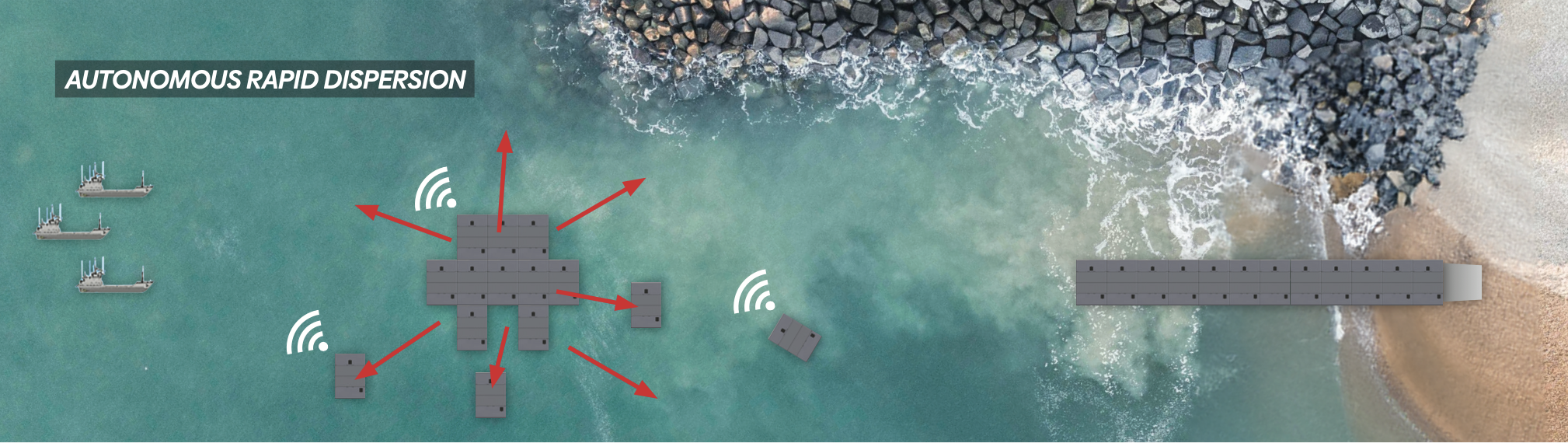
Heavily Contested
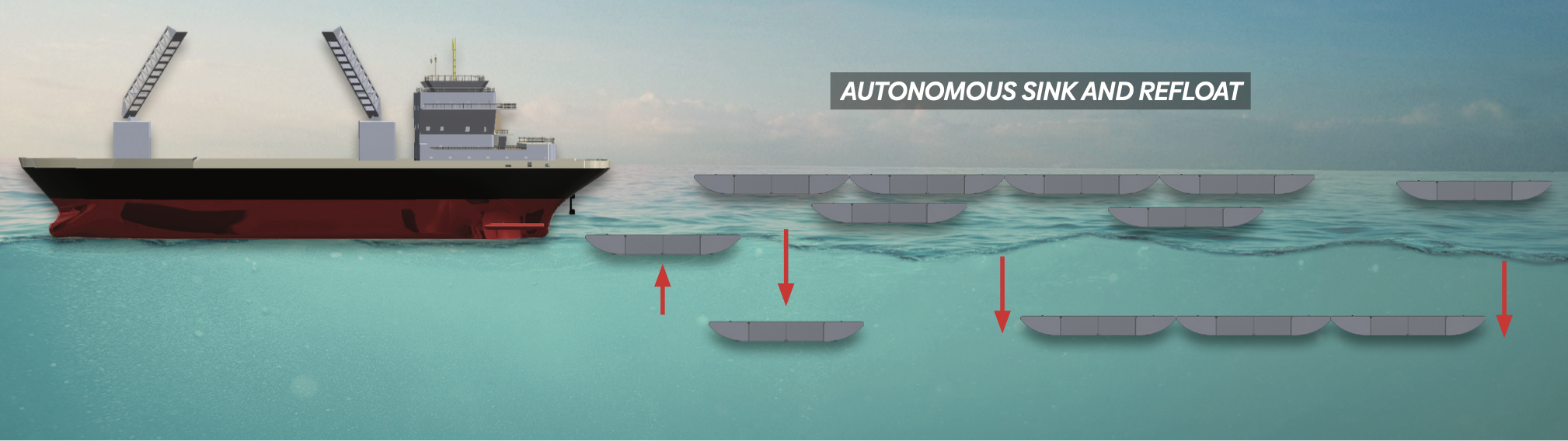
Mission Improvements
Sea State Operating Capacity
Legacy Causeway only capable of operating up to Sea State 3, restricting throughout capabilities and challenging the Joint Staff. Climate adaptability is limited, requiring further analysis on safe haven and sustainment options.
Expeditionary Deployment
Shipping configuration and strategic lift requirement for MCS limits expeditionary deployment. Instream Build require large personnel requirement and requires up to 14 days for deployment.

Joint Service Compatibility
Differences in coupling mechanisms, draft requirements, and ramp configurations often complicate the seamless integration of Army Modular Causeway Systems (MCS) with Navy Improved Navy Lighterage System (INLS) components, leading to delays, manual workarounds, and reduced throughput in joint JLOTS operations.
Material Strength & Mission Readiness
Marine grade structural steel and aluminum alloys require regular maintenance and experience significant degradation overtime. Unit equipment sets afloat or stored at depot level, suffer from adequate preventative maintenance and leaves pontoons vulnerable to hull punctures and damage in field environments.
Operators & Power Modules
Modular warping tugs often face mission-capability shortfalls due to maintenance complexity, low readiness rates, and limited self-propulsion. Assembly requires a large crew and significant time, straining personnel resources and slowing deployment in time-sensitive JLOTS operations.
Survivability, Cover and Concealment
Causeway systems are large strategic enablers that are essential to theater opening operations. Aerial, surface, and subsurface threats raise concerns on capabilities in semi-permissive environments.
Priorities of AM-CFS
Autonomous Navigation and Assembly
Selective power modules enhance the rapid deployability of the Causeway System and RRDF
Tailored to mission set based on operator requirements, with the ability to scale autonomously operated pontoons or sections. Allows the end user to determine how much human interface they wish to involve in ship-to-shore logistics.
Sink, Refloat, Dispersion, and Displacement
Controlled ballast and water-tight compartments utilize material properties to submerge pontoons to protect against inclement weather and A2 threats. Allows for potential pre-positioning at deliberately selected sites
Causeway configurations capable of separating and dispersing on demand, allowing for greater commander flexibility in operations.
Modular concepts allow for continued throughput in the event of compromised sections due to contested environments.
Improved Hull Design
Advanced hull forms and the use of high-density polyethylene (HDPE) or composite materials enable dynamic positioning, enhanced stabilization in varying sea states, and optimized freeboard control, allowing platforms to better maintain operational posture and alignment during high-tempo littoral logistics missions.
Ability to retrofit legacy equipment and standard commercial pontoons/barges to survive initial strikes or compromised hulls without losing the entire asset.
Autonomous Modular Causeway Ferry System (AM-CFS) Conceptual Build
Strategic lift vessel in-stream build causeway sections. Modified shipping configuration allows greater flexibility in strategic lift.
Units communicate via Bluetooth to determine relative positions and begin self-assembly in ‘safe’ position, while additional units continue to be offloaded.
Once a critical mass of units self assemble, automated causeway will stab the beach, requiring no use of Modular Warping Tugs.
Individual units continue to assemble into Full Trident Pier. Dynamic positioning stabilizes platform.
Army and Navy Lighters discharge throughput, surviving Sea State 5.
Let’s Work Together
If you're interested in working with us, complete the form with a few details about your project.